Blacksburg Neighborhoods to Watch in 2026, and Why They're Positioned This Way
Blacksburg is one of the more supply-limited towns in Virginia, which is part of what makes it so watchable. Here's why the Prices Fork corridor, older in-town neighborhoods like Woodbine and McBryde, and Clifton Town Center in Christiansburg are worth a closer look going into 2026.
Grant Irby
REALTOR®, University & Main Real Estate Group · Keller Williams New River Valley
Blacksburg is one of the most supply-limited towns in Virginia, and that's a big part of what makes it one of the more predictable markets to watch. After years of helping buyers and sellers here, these are the areas I would be watching closely going into 2026, and more importantly, why each one is positioned the way it is.
My name is Grant Irby. I'm a Realtor in Blacksburg, and if you're considering a move to the New River Valley, this is the kind of context I walk through with buyers every day.
The Prices Fork Road corridor
You can watch a market shift in real time if you know where to look, and right now in Blacksburg, that direction is west, down Prices Fork Road.
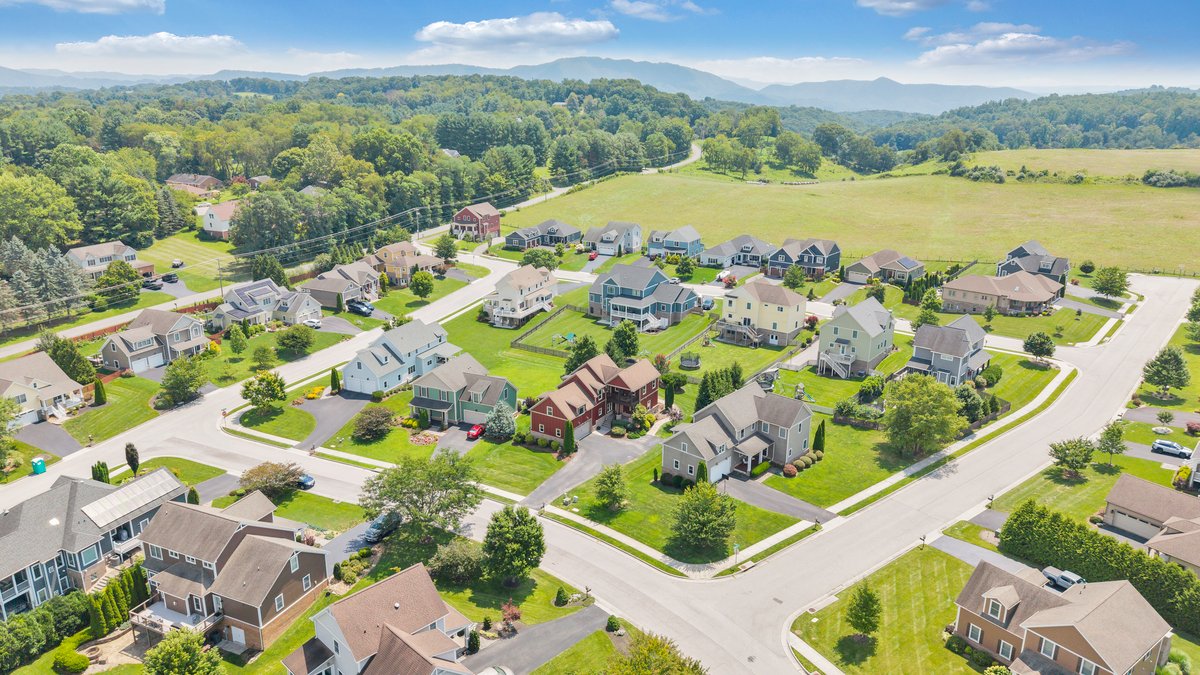
The town can really only grow in a meaningful way in one direction: primarily west out of Virginia Tech's campus along Prices Fork Road. The areas north and east of downtown and campus are generally blocked from major development by the mountains and the landscape. Along Prices Fork, there is much more available land. What used to be farmland has become the main outlet for housing demand.
Two active new construction communities are already established along this stretch. The Preserve by Eagle Construction is one of the better known, with single-family homes, villas, and townhomes, plus amenities such as sand volleyball, pickleball, walking trails, playgrounds, and a dog park. Westhill is the other, offering a mix of townhomes, villas, and single-family homes in what many buyers in this market would consider a middle price range.
There's another signal here that matters just as much as the construction itself. Montgomery County recently held a community input session focused specifically on Prices Fork. The county already built its newest elementary school, Prices Fork Elementary, about 10 years ago. The conversation was not about whether this area would grow. It was about how it should grow. That kind of public planning is meaningful. It shows local leadership planning for growth rather than only reacting to it.
Growth tends to follow infrastructure. Road access, available land, schools, and active county-level planning are a combination that supports longer-term expansion. This is not theoretical. You can see it in permitting activity, subdivision development, and the conversations already happening at the county level, with a median price in the high $500,000s.
The ripple effect: older homes inside town limits
What makes this corridor especially interesting is the effect it has on established neighborhoods just inside town.
Historically, buyers in Blacksburg have leaned heavily toward move-in-ready, turnkey homes: clean, no projects, no to-do list on day one. As prices continue to move higher, that thinking starts to change. When average prices push into the mid-$500,000s, buyers who are set on staying in Blacksburg begin looking at the market differently. That shift pulls attention toward 1960s and 1970s homes in well-established neighborhoods like Woodbine and McBryde.
The trade is fairly straightforward. Instead of stretching for a fully updated home, a buyer steps into an older property at a lower entry point and stays inside town limits. They keep access to Blacksburg public schools, with Blacksburg High School ranked #15 of 267 Virginia high schools for STEM by Niche.com (as of November 2026). They stay close to Virginia Tech, and they buy into a market that has shown steady, multi-year appreciation. The trade-off is the condition of the home, but that can also be a path to building equity over time in a location that tends to hold its value well.
The town itself is reinforcing this shift. Blacksburg recently approved Ordinance 2053, which allows for higher-density housing options on smaller lots, including duplexes and townhomes, within existing neighborhoods. The Housing Resilience Grant Program also gives eligible homeowners support for upgrades like energy efficiency and accessibility, which can lower the barrier to improving these homes over time.
What you're starting to see is a different kind of buyer behavior. Instead of prioritizing finishes and turnkey-ready homes, more buyers are prioritizing location. They're willing to take on a project if it means getting into a stronger location. Over the long term, that trade often makes sense. You give up some degree of finish on day one, but you gain exposure to a part of the market where value tends to be more durable.
If Prices Fork represents expansion outward, Woodbine and McBryde represent a repositioning inward. These aren't brand-new subdivisions. They're location plays.
Woodbine
There's a type of buyer in this market who's willing to give up a brand-new kitchen in exchange for a location that would be very hard to replicate today. Woodbine is where that trade starts to make a lot of sense.
The homes here are mostly from the 1970s. You're generally getting a little larger lot, mature trees, and a quieter residential feel, all within close proximity to Virginia Tech and downtown Blacksburg. That location is the foundation of the value.
As new construction along Prices Fork continues to move into higher price ranges, buyers who want to stay close to the heartbeat of Blacksburg, and who don't want to compete at the top end, are starting to shift their focus. Woodbine is one of the places where that change is becoming more noticeable. When new construction is consistently priced in the mid to high $500,000s and beyond, older homes in the low $400,000s start to look different. Instead of feeling like a compromise, they can look like a strategic entry point into a high-demand area. When value is driven by location and demand rather than timing, it tends to hold more consistently. That's where Woodbine benefits.
McBryde
Even closer to campus, there's another kind of value, and it's less about what's available than about what simply can't be built anymore.
Imagine being able to walk to campus, to the rec center, and to the places that make Blacksburg feel like Blacksburg. That's the day-to-day reality in McBryde, and it's something a new development can't replicate. The neighborhood sits right next to Virginia Tech, and it's fully built out. There is no meaningful land left for large-scale new construction, so what you see today is largely what the supply will look like going forward.
When supply is limited and demand stays consistent or continues to climb, supported by Virginia Tech's continued enrollment, values tend to hold. The floor stays relatively stable. For buyers who prioritize stability over trying to maximize upside, McBryde is a strong option to consider, especially with an average price point in the mid-$400,000s. Location scarcity is one of the more reliable drivers of value in real estate. Once an area is built out, that proximity can't be recreated.
Clifton Town Center in Christiansburg
A lot of conversations about Christiansburg start with price. Generally speaking, buyers can get more for their money there than in Blacksburg. That matters, but the bigger shift is what's being built, because that's what's changing the type of buyer who's paying attention.
As inventory tightens in Blacksburg and prices keep pushing higher, buyers naturally expand their search. Clifton Town Center is a clear example of where that attention is going. It's a 37-acre mixed-use development bringing together retail, residential, office space, and a hotel in a walkable, pedestrian-focused setting. It's designed to support more than 500 households once completed, and it's led by local builder Stateson Homes.
Mixed-use developments tend to change how buyers evaluate location. When daily needs are within walking distance, convenience looks different. Instead of driving 10 to 15 minutes for everyday errands, more of that can happen close to home. For buyers who have been priced out of new construction in Blacksburg, this offers a newer product at a lower entry point, with that lifestyle infrastructure being built around them in real time.
The development also sits directly across from Christiansburg Huckleberry Park, a 50-acre space with an all-inclusive playground, a splash pad, dog parks, and turf fields. That park connects to the Huckleberry Trail, which runs all the way into Blacksburg and the Virginia Tech campus. A non-motorized connection between a newer community in Christiansburg and the core of the Blacksburg market is a real advantage.
Christiansburg simply has more room to grow than Blacksburg does. Projects like this can create their own submarkets that appreciate on a different path than the surrounding area.
In 2026, the neighborhoods that pull ahead are unlikely to be the ones that simply got lucky. They're more likely to be the ones where limited land, steady demand from Virginia Tech, and real planning and investment are lining up at the same time. If you want to get specific about which of these areas fits your situation and budget, I'd be glad to help you think that through.
Frequently Asked Questions
Have Questions? Let's Talk.
I'm Grant Irby, a Realtor based in Blacksburg serving the New River Valley. Whether you're buying, selling, relocating, or investing, I'd be happy to help you think through your situation.
Schedule a Free Consultation