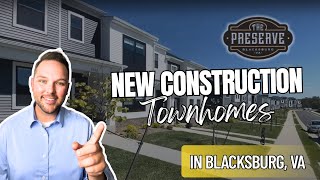
Building New in Blacksburg? 6 Questions to Ask Your Builder Before You Sign
If you're weighing a new construction home in Blacksburg or the NRV, these are the six questions that separate informed buyers from frustrated ones.
Grant Irby
REALTOR®, University & Main Real Estate Group · Keller Williams New River Valley
If you're weighing a new construction home here in Blacksburg or anywhere in the New River
Valley, you're probably picturing that moment when you walk through the front door of a house
nobody else has ever lived in. Fresh paint, modern layouts, energy-efficient systems, and the
ability to pick your own finishes—new construction can be a genuinely great experience. I know
because I've been through it personally, and I've guided plenty of clients through the process as
a realtor with Keller Williams New River Valley.
But here's what a lot of buyers don't fully grasp until they're already knee-deep in the process:
once you sign that builder contract, the timeline moves fast, and the terms you agreed to are
usually locked in. Builder contracts aren't written like the standard resale contracts you'd see
when buying an existing home. They're drafted by the builder's legal team, for the builder's
benefit. That's not a knock on builders—it's just the reality of how these deals work.
I want to be upfront about something before we get into the details. This isn't a video or a blog
post meant to make you suspicious of builders. There are excellent builders working in this
market, and I've personally partnered with Eagle Construction, the company that built my own
home, on several projects because I believe in what they deliver. This post is about arming you
with the right questions so you walk into your build with clear eyes, realistic expectations, and a
lot fewer surprises along the way.
So let's get into the six questions every buyer should ask before signing a new construction
contract in Blacksburg.
Question One: What Happens If Building Material Costs Go Up During Construction?
This might be the single most overlooked question on this list, and it's one that can cost you real
money if you don't ask it. Some builder contracts offer a genuinely fixed price. If lumber prices
spike, if concrete costs jump, if labor gets more expensive after you sign, the builder eats that
difference. Other contracts include escalation clauses that allow the builder to pass those cost
increases directly on to you.
We saw this play out in dramatic fashion during and after COVID, when material costs
skyrocketed almost overnight. Buyers who didn't understand their contract language found
themselves facing unexpected price increases mid-build, with very little leverage to push back.
Before you sign anything, ask your builder directly: is my price truly locked, or can it change? If it
can change, under exactly what circumstances? Some contracts define those circumstances
narrowly, tied to specific material categories. Others use broader language around "unforeseen
circumstances" that can cover almost anything. You'll also want to ask whether there's a cap on
how much the price can increase and whether you have the right to walk away if costs climb
beyond a certain threshold.
Just because a builder hasn't raised prices on past buyers doesn't mean they won't in the future.
Market conditions shift, and you want to understand your exposure before you're financially
committed.
Question Two: What's Actually Included in the Price, and What Comes at a Premium?
That sign out front advertising homes "starting in the mid-500s" is rarely the price you'll actually
pay for a finished home. Model homes are built to sell emotion. They're loaded with upgraded
cabinets, extended islands, hard surface flooring, tile showers, built-in shelving, and extra
windows—features that often carry significant upgrade costs above the base price.
Then there's the lot itself. Certain homesites carry premiums based on location, view, size, or
topography. A corner lot, a walkout basement lot, a flatter lot, or a cul-de-sac placement can all
add thousands to your final number before you've even touched the design center.
Ask your builder for a written list of exactly what's included in the base price. Get specific about
flooring, countertops, cabinets, appliances, ceiling height, trim packages, lighting, and
landscaping. Find out whether the yard comes with sod, seed, or nothing at all. Ask whether a
deck or patio is included, optional, or unavailable entirely. And don't overlook structural features
like garages, bonus rooms, basements, and porches—these are often specific to certain plans
and may not be standard even if you saw them featured in another home on the lot next door.
The more detail you get upfront, the fewer awkward budget conversations you'll have to have
once construction is underway and the numbers start creeping upward.
Question Three: What Level of Customization Do You Actually Offer?
Most builders give you a design center stocked with pre-selected upgrade packages. That
works fine for buyers who are happy choosing from a curated list. But what happens when you
want something outside those options?
Ask specifically whether the builder allows what's known in the industry as non-standard
options, or NSOs. Maybe you've got a specific faucet you love, a different shower diverter you
want installed, or you'd like to add a porch to a floor plan that doesn't normally include one.
Some builders are flexible and will accommodate custom requests with a pricing adjustment.
Others run tight construction schedules and simply won't deviate from their predefined menu of
choices, no matter how small the request seems.
Understanding how flexible your builder is early on tells you whether the home can truly be
shaped to fit your lifestyle or whether you'll need to make peace with compromise. This is
especially important if you have specific accessibility needs, a home office requirement, or a
layout preference that falls outside the standard offering.
**Question Four: What Incentives Come With Using Your Preferred Lender, Title Company, or
Other Vendors?**
Builders frequently offer incentives to buyers who use their preferred lending and title partners,
and those incentives can be substantial. We're talking closing cost assistance, free upgrades,
design center credits, or interest rate buydowns.
In some cases, using the builder's preferred lender genuinely saves you money and offers
competitive rates on top of the incentive. In other cases, the incentive is really just offsetting a
higher rate or higher fees baked into the deal. The only way to know which situation you're in is
to compare the builder's offer against what you can get shopping around on the open market.
Ask exactly what the incentive covers and whether it's contingent on other conditions. Ask
whether you're free to shop rates elsewhere without losing other parts of the deal. And ask
whether these incentives are likely to change—many builders increase incentives when homes
in a community aren't moving as quickly and pull back once demand picks up. Knowing where
things stand right now versus where they might head later gives you real leverage in your
decision-making.
**Question Five: Can I Make Changes During the Build, and What Does That Process Look
Like?**
Even buyers who feel completely prepared often change their minds partway through
construction. Maybe you walk the framed house and realize you want a different outlet
placement. Maybe you decide a bathroom layout needs to shift once you see it in three
dimensions instead of on paper.
Ask upfront whether changes are permitted after your initial selections are finalized, and how
late in the process those changes can still be made. Some builders only allow changes during
specific windows tied to construction milestones. Others will accommodate changes at nearly
any point, but with added costs and extended timelines attached. And once framing, plumbing,
or electrical rough-in reaches a certain stage, some changes simply won't be possible anymore,
regardless of how much you're willing to pay.
Ask how these changes get documented too. Are change orders written and signed before work
begins? Are the cost and timeline impacts spelled out clearly in advance? A builder with a clean,
documented change order process protects you just as much as it protects them, and it keeps
expectations aligned on both sides.
**Question Six: What Warranty Do You Offer Beyond the State Minimum, and What's the Claims
Process?**
Virginia requires builders to provide a baseline warranty: the home must be built in a
workmanlike manner and fit for habitation for one year, and free from major structural defects for
five years. Read that language again—"workmanlike manner" and "fit for habitation" are pretty
subjective standards, and that's exactly the point. The state minimum sets a floor, not a ceiling.
I've seen builders show up at the one-year mark and recaulk every cracked line, shave down
doors that stick, and repour a driveway section that wasn't done right the first time. I've also
seen builders with no real system in place for handling something as small as a squeaky vent or
a popped drywall nail. The gap between those two experiences is enormous, and it directly
affects how much you enjoy owning your home in those first few years.
Ask what warranty coverage exists beyond the state requirement and exactly what it covers.
Ask how you submit a claim—online, in writing, by phone—and whether there's a deadline for
reporting issues. Ask how quickly the builder is required to respond once a claim is submitted.
Find out whether cosmetic issues like hairline cracks, nail pops, and minor drainage concerns
are covered, and for how long. And specifically ask how the builder handles warranty items
around the eleven-month mark, since that window before your one-year warranty expires is
often the most important time to catch and document anything that needs attention.
A strong warranty isn't just about what's on paper. It's about how responsive the builder actually
is when you need them, and knowing that answer before you sign gives you real peace of mind
heading into ownership.
Why Representation Matters in New Construction
Here's the bottom line: builder contracts exist to protect the builder. That's not cynicism, it's just
how these agreements are structured. The sales team you meet in the model home works for
the builder, not for you. They're helpful, they're often knowledgeable, and they can walk you
through the process smoothly—but their loyalty is to the company signing their paycheck.
Having your own realtor in your corner from the very first conversation changes the dynamic
entirely. A good agent helps you ask the right questions before you're emotionally attached to a
lot or a floor plan. They help you separate genuine value from upgrade markup. They read the
contract language with an eye toward your protection, not just the builder's convenience. And in
most cases here in the New River Valley, using a buyer's agent costs you nothing extra, since
the builder typically covers that commission as part of the deal.
Bringing It All Together
New construction in Blacksburg and across the New River Valley can absolutely be the right
move for a lot of buyers. You get modern efficiency, a layout built around how people actually
live today, and the satisfaction of being the very first person to call a house home. But the
process rewards buyers who go in prepared and penalizes those who don't.
Before you sign anything, make sure you understand whether your price is truly fixed or subject
to change, exactly what's included in that base price versus what you'll pay extra for, how
flexible the builder is with custom requests, what strings come attached to preferred lender
incentives, how changes get handled once construction starts, and what warranty protection
exists beyond Virginia's baseline requirements.
Asking these six questions early doesn't just protect your wallet. It sets the tone for a smoother,
more transparent relationship with your builder from day one through move-in day and beyond.
If you're considering building new construction here in Blacksburg or anywhere across the New
River Valley, I'd love to help you walk through this process with clarity and confidence. Reach
out to me directly, and let's make sure you're asking the right questions before you ever put pen
to paper on that contract.
Frequently Asked Questions
Have Questions? Let's Talk.
I'm Grant Irby, a Realtor based in Blacksburg serving the New River Valley. Whether you're buying, selling, relocating, or investing, I'd be happy to help you think through your situation.
Schedule a Free Consultation