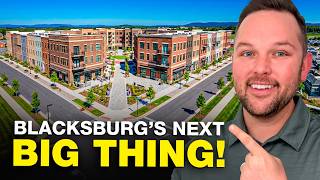
Virginia Tech Cancels 5,000-Bed Housing Project: What It Means for Blacksburg Home Prices and Rents
A single decision by Virginia Tech's Board of Visitors could shift what you pay for rent or what your investment property is worth. Here's the full breakdown.
Grant Irby
REALTOR®, University & Main Real Estate Group · Keller Williams New River Valley
Did you know that a single decision by Virginia Tech's Board of Visitors could shift what you pay
for a house in Blacksburg or Christiansburg? I'm fired up about this topic because it touches
nearly everyone in the New River Valley, whether you're a student, a parent, a landlord, or a
family trying to buy a home. Virginia Tech recently walked back a massive on-campus housing
plan, and the fallout is already shaping our local real estate market in ways that go far beyond
campus boundaries. Let's break down what happened, why it matters, and what it means for
you if you live, work, or invest in this region.
Virginia Tech's Explosive Growth Over the Past Decade
To understand the pressure our housing market is under, you have to understand how fast
Virginia Tech has grown. As of the 2024-25 academic year, Virginia Tech reported just over
31,000 undergraduate students and a little over 7,000 graduate and professional students,
bringing total enrollment to just over 38,000. That's growth of roughly 2,500 students since 2019
and 7,600 students since 2014. That's almost 25% growth in a single decade.
And the demand isn't slowing down. Last year, Virginia Tech received a record-breaking
57,000-plus applications for fall 2025 admission, the class that just started their freshman year.
That's a 10% jump from the previous year and marks the fifth consecutive year the university
has set a new application record. Virginia Tech isn't just growing. It's growing faster every single
year, and that growth places enormous pressure on housing both on campus and off campus.
The Student Life Village: A Political Hot Button
Before we talk about the housing impact on our local market, let's recap what actually
happened, because this story has some twists.
Virginia Tech's Board of Visitors, the governing authority appointed by the governor of Virginia,
approved the Student Life Village in November 2022 as part of the university's master plan. This
project would have added 5,000 student beds on campus, built on top of the existing nine-hole
golf course. Approving it for the master plan didn't mean construction was guaranteed. The
project still needed to clear several layers of university review.
Still, this move stirred up plenty of tension with the town of Blacksburg, which has its own vision
for residential development and zoning. The town liked the idea that 5,000 new beds on campus
would ease the off-campus apartment shortage. Local developers, on the other hand, worried
that a flood of new on-campus housing would leave their off-campus apartments sitting empty
and unprofitable. Around this same time, the town approved more than 5,000 new beds for
off-campus student housing developments, adding even more supply into the mix.
Then, in March 2025, the Board of Visitors reversed course and rescinded the Student Life
Village from the master plan. In essence, they hit pause on the entire project.
University President Tim Sands addressed the reversal directly, stating: "The conversation today
is not about restricting housing on campus. It is about ensuring that the board and the
administration have been diligent in considering and reconsidering all of the options to achieve
affordable, high-quality housing that supports the academic and social success of on-campus
student population. I welcome that discussion and the creative solutions that will result."
The town of Blacksburg didn't take this quietly. In a formal letter, town leadership stated that if
the Board of Visitors removed the Student Life Village from the master plan, the university
should freeze undergraduate enrollment until a real plan existed to house additional students on
campus. That's about as direct as town-and-gown friction gets.
Earlier this month, the Board of Visitors approved $10 million in planning authorization for a new
residence hall that would add 600 beds to campus. Compare that number to the original
5,000-bed proposal, and you can see just how far this scaled back. And even that 600-bed
project still needs additional approval before construction can begin. We're in the very early
stages here, and the gap between what was promised and what's actually happening is
significant.
Why This Matters for Blacksburg's Rental Market
Here's the heart of the issue for those of us living and working in this market: when the
university doesn't build enough housing on campus, that demand doesn't disappear. It spills
directly into the off-campus rental market. And in a college town like Blacksburg, that ripple
effect is massive.
Consider this: more than two-thirds of Virginia Tech students live off campus. That means tens
of thousands of students competing for apartments, townhomes, and single-family homes in a
town with a permanent population of roughly 45,000 residents. You don't need an economics
degree to understand what that does to rents and available supply.
According to the town's own housing study, one-bedroom rents jumped nearly 20%,
two-bedroom units climbed over 40%, and even larger rental units saw significant price
increases over just a few years. Students are paying more, parents are footing bigger bills, and
everyone competing for affordable housing is feeling the squeeze.
The Squeeze on Local Families and Long-Term Residents
This is where the story becomes more than a student housing issue. It becomes a community
issue.
When purpose-built student housing can't keep up with demand, students start renting
single-family homes in established neighborhoods. That means fewer housing options for local
families, young professionals, and anyone hoping to put down roots here long-term. Longtime
residents sometimes feel like their neighborhoods are turning into miniature dorms, with cars
spilling onto the streets, late-night noise increasing, and the overall character of family
neighborhoods shifting under the weight of student rental demand.
Meanwhile, families who want to buy in Blacksburg face their own uphill battle: pricing. As of the
time I'm writing this, the median home price in Blacksburg sits around $425,000. Compare that
to roughly $335,000 in Christiansburg and $285,000 across the entire New River Valley. That
gap is significant, and it's fueled in large part by constant demand from student renters and
investors purchasing properties strictly for rental income.
The decisions Virginia Tech makes about on-campus housing directly shape the cost of living for
everyone in Blacksburg, not just the students walking to class every morning.
The Regional Ripple Effect: Christiansburg and Beyond
Here's the part that a lot of people miss: this issue doesn't stop at Blacksburg's town limits.
When students and families can't find housing in Blacksburg, they look toward Christiansburg,
Radford, and smaller towns across the New River Valley.
Christiansburg in particular has absorbed a lot of this spillover. Drive around town and you'll see
new apartment complexes, townhomes, and subdivisions going up at a pace closely tied to
Virginia Tech's enrollment growth. Christiansburg has more available land and generally lower
home prices, making it a natural pressure-relief valve for Blacksburg's housing crunch.
But that shift brings its own set of consequences. We're seeing increased traffic along Route
460, added pressure on local schools and municipal services, and a widening gap between
where students actually live and where they attend class each day. Virginia Tech's enrollment
decisions don't just reshape the campus. They reshape the entire housing landscape across the
New River Valley.
Who Wins and Who Loses in This System
Let's break down the winners and losers, because there are clear patterns here.
Students lose when there aren't enough beds on campus, facing higher rents and longer
commutes to class. Parents lose because housing costs stack on top of already steep tuition
and fees. Local families lose when they get priced out of the market entirely or pushed farther
away from town. The town of Blacksburg itself loses when neighborhoods destabilize and
affordable housing options continue to shrink.
On the flip side, developers and landlords have been major beneficiaries over the past decade,
riding the wave of enrollment growth by building high-demand rental housing. Even landlords
carry risk, though. If Virginia Tech suddenly built thousands of new on-campus beds, some of
those high-rent apartments off campus could sit vacant. That tension between the university, the
town, and private developers explains a lot of the heated debate surrounding projects like the
Student Life Village.
What the Future Holds for Blacksburg Real Estate
Virginia Tech has made one thing clear: growth isn't slowing down. Applications keep breaking
records year after year, and there's no indication enrollment will shrink anytime soon. Honestly,
that's a great thing for our region. When Virginia Tech thrives, Southwest Virginia thrives right
alongside it.
But the real question moving forward is whether the university commits to building substantial
on-campus housing or continues leaning heavily on the private rental market to absorb overflow
demand. If Virginia Tech moves forward with only 600 new beds instead of the originally
proposed 5,000, expect continued pressure on Blacksburg's rental market, likely pushing rents
even higher over the next several years. Families will keep competing directly with students for
housing, and more residents will look toward Christiansburg and beyond for affordable options.
If, on the other hand, Virginia Tech revisits a large-scale project similar to the Student Life
Village, we could see meaningful relief. More on-campus beds would ease pressure on local
rentals, help stabilize pricing, and free up single-family homes for families rather than student
renters. That scenario would likely draw pushback from developers who've built entire business
models around steady student rental demand.
Either way, the stakes are high. These aren't just decisions about dorm rooms and floor plans.
They're decisions about affordability, community character, and the future growth trajectory of
the entire New River Valley.
Final Thoughts: Why This Matters to You
The relationship between Virginia Tech and the town of Blacksburg is dynamic. Sometimes the
two are perfectly aligned, and sometimes they're in direct conflict, but they remain inseparable
from one another. Every choice Virginia Tech makes about on-campus housing ripples into
every corner of this community, from the price of an apartment lease to whether a young family
can buy their first home here to how Christiansburg continues to grow and develop.
As a realtor working here in the New River Valley, I see these effects firsthand every single
week. Parents call asking about investment properties for their students. Families relocating
here for jobs at Virginia Tech, Radford University, or in our growing research and healthcare
sectors are genuinely shocked by the price gap between Blacksburg and surrounding areas.
Homeowners wonder what rising demand will mean for their property values five years down the
road.
So when you hear news about the cancellation of the Student Life Village or the approval of just
600 new beds, understand that this isn't simply an internal university matter. It's a
community-wide conversation with real consequences for everyone who lives here, works here,
and invests here.
Housing is about far more than a roof over your head. It's about opportunity, stability, and the
future trajectory of our entire region.
If you found this breakdown helpful, subscribe for more hyper-local content focused on
Blacksburg and the New River Valley real estate market. And if you're thinking about buying,
selling, or investing in property anywhere in or around Blacksburg, I'd genuinely love to be the
realtor you choose to work with. Reach out, introduce yourself, and let me know how I can help
you reach your real estate goals here in the New River Valley. Thanks for reading, and go
Hokies.
Frequently Asked Questions
Have Questions? Let's Talk.
I'm Grant Irby, a Realtor based in Blacksburg serving the New River Valley. Whether you're buying, selling, relocating, or investing, I'd be happy to help you think through your situation.
Schedule a Free Consultation